Flash For A Camera – My Camera Flash Photography Gear List
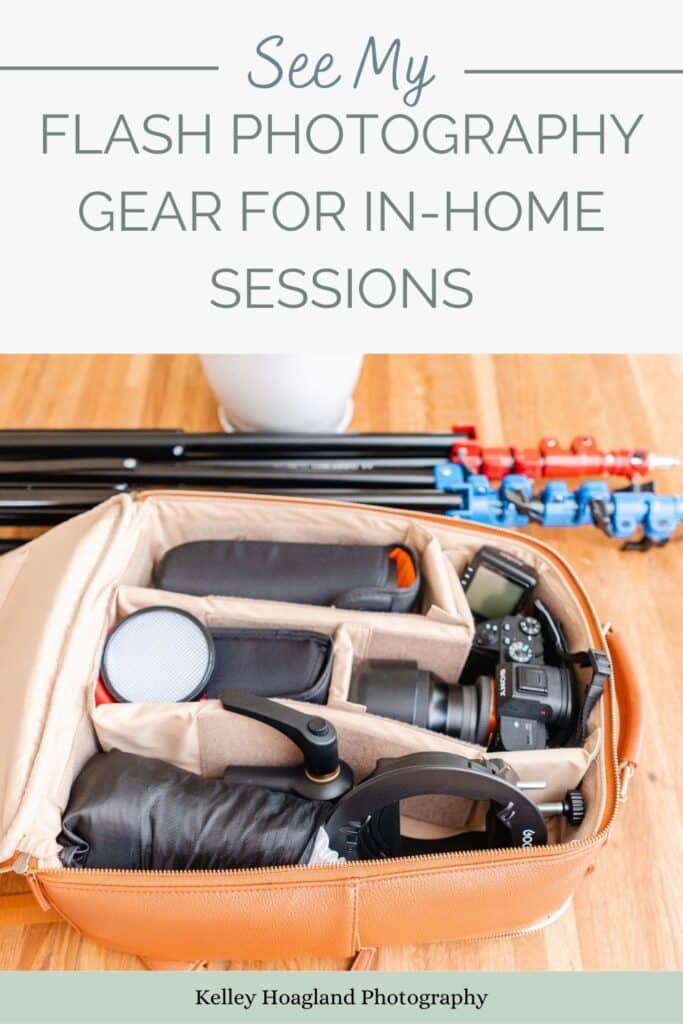
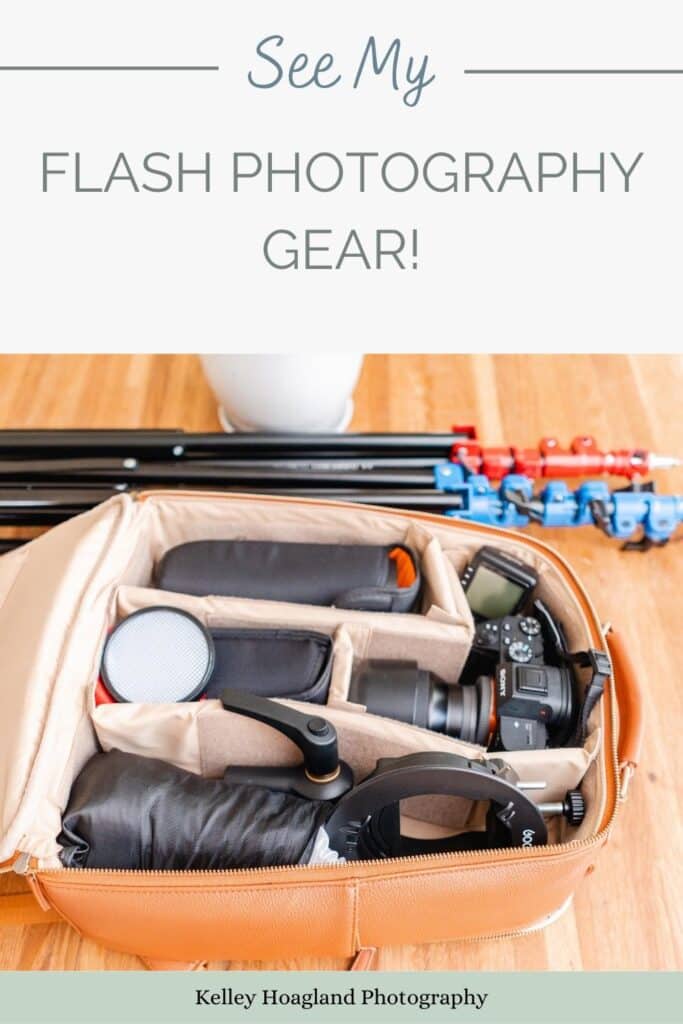
Thinking of adding artificial light to your photography skills and looking for a flash for a camera? For this post, I thought it would be helpful to share my camera flash photography gear list and go through what exactly I have in my camera bag and lug around for sessions in my clients’ homes and other indoor photoshoots.
If you’re new to the blog, in this blog series, No Fear Flash, I’ve provided a basic intro to flash photography. This info is specifically geared toward photographers who do indoor lifestyle sessions, but can also be applied to other genres such as indoor headshots or brand shoots.

TL/DR: Flash For A Camera – My Preferred Camera Flash Photography Gear
This post contains affiliate links. This means this website may receive compensation if a purchase is made through the link at no extra cost to you.
I use a Sony camera body and therefore purchase camera flash equipment marked with an “S”, indicating that it’s compatible with my camera body. If you use Canon, Nikon, or etc, you’ll need to make sure you’re purchasing flash equipment that’s compatible with your camera make.
- The Godox V1 is a great speed light light to start with.
- To use your flash off camera, you’ll need a trigger like the Godox XPro II
- Light stands also come in handy when using off camera flash. The Flashpoint Pro Heavy Duty Light Stands are inexpensive and get the job done.
- Read more below to learn about the modifiers I like to use!


My Preferred Flash for a Camera:
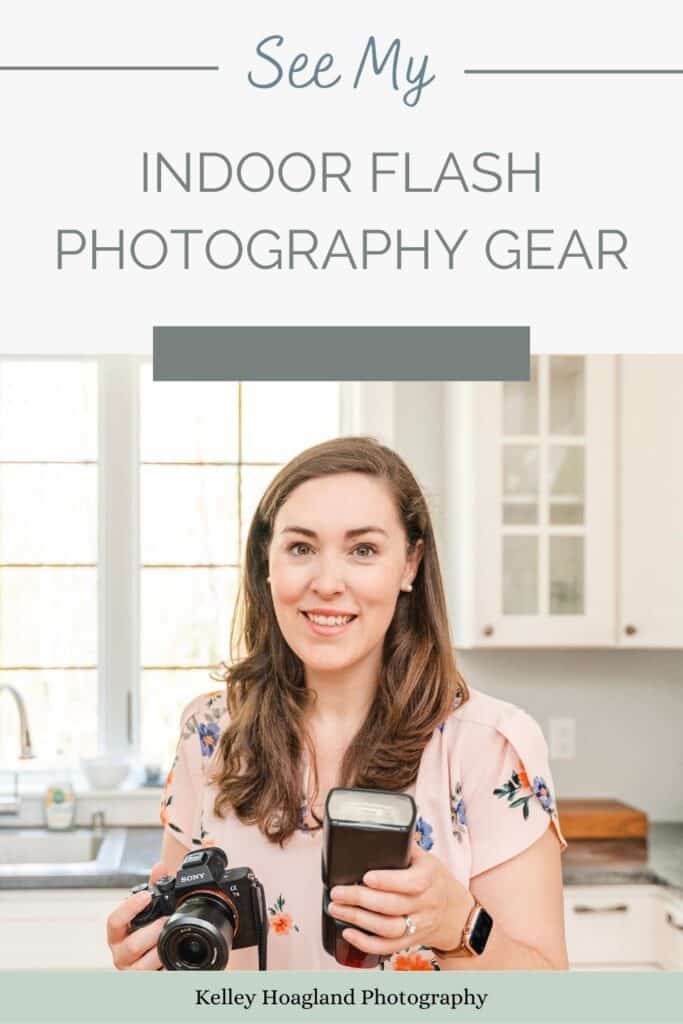
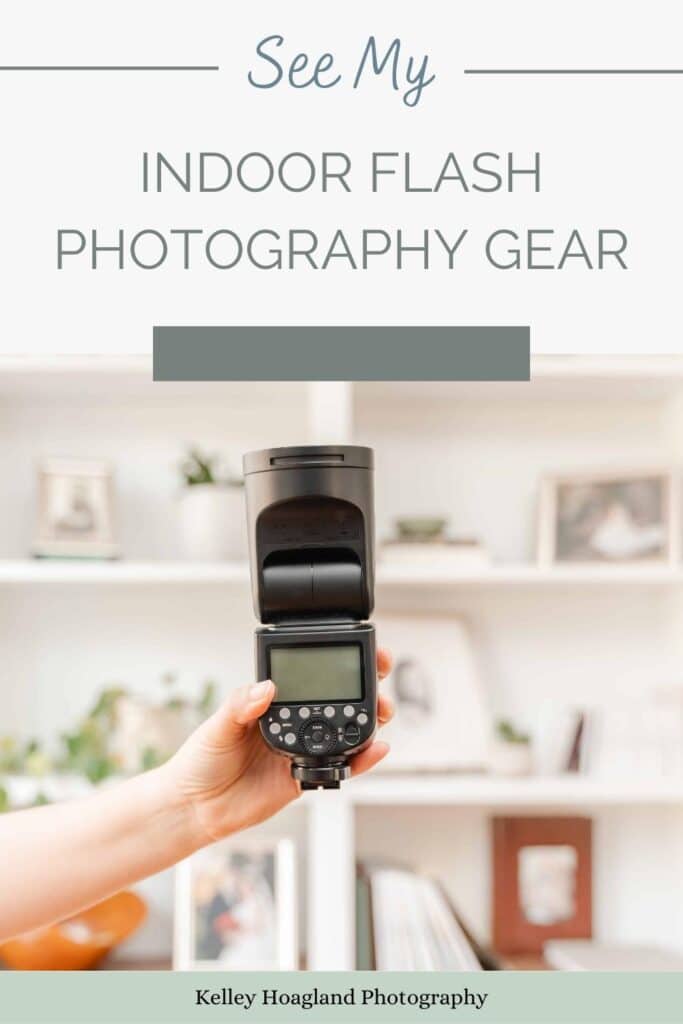
When first choosing a flash for a camera back in 2020, I went with the Godox V1-S and I’m so glad that I did! (The “S” is for Sony, so if you are using a Canon camera you’ll need this Godox V1. If you’re using Nikon you’ll need this Godox V1.) The camera flashes I purchased over 6 years ago are still going strong and serving me well!
Actually, I regularly use two of these flashes during my sessions.
As you are digging into the world of artificial lighting, you will find that some photographers use strobes and others use speed-lights. Strobes are generally more powerful. They also are larger in size and tend to be more expensive (especially if you want one that is battery powered). Speed-lights are smaller, less powerful, and battery operated. The Godox V1 is a speed-light.
I originally bought my Godox V1s for a wedding I was photographing, but I have used them in countless indoor lifestyle sessions since. I have yet to run into a situation where if felt they did not give off enough light. They are so compact and can easily fit into my camera bag.

I also have Godox V860ii as a back up and as a 3rd light, should I need it. Again, purchase the flash based on the type of camera body that you have. With my Sony camera body, I purchase flashes labeled “S”. (Generally, I stick to two lights during family sessions.)
While I like the v860 fine as a back up, I still prefer the V1. The temperature of the light looks more natural to my eyes and the light quality somehow seems a little softer even when bounced.
Other Flash Equipment: My Trigger

The Godox XPro II TTL Wireless Trigger for Sony is the trigger I use to operate my off camera flashes. I love this trigger for it’s simplicity and the fact that it will allow me to use my VI and V860II flashes at the same time.
The second generation has a nice metal hot shoe that feels much more durable than the original model I had.
Once again, you’ll want to purchase a trigger for your camera that is compatible with your camera make.
One nice thing about using Godox, a third party camera flash system, is that all of their flashes will work with the trigger. For example, I have a Nikon film SLR camera that I use. I was able to just buy a Nikon Godox Trigger for my film camera and the trigger communicates just fine with the Godox V1-S speed lights I bought to use with my Sony a7iv. (This only works when I’m using off camera flash, but it’s saved me some money!)
My Light Stands
If you’re using off camera flash, you’re going to need a light stand to hold your flash. (The Godox V1 does come with little “feet” that fit onto the hotshoe. Check the back pouch. In theory you could just place the flash on a book shelf or high cabinet. I’ve done this in a pinch at home. However, for real control over the placement of your light, you need a stand.)
I have two Flashpoint Pro Air Cushioned Heavy Duty Light Stands that I bring to every session. While there are probably better stands out there, these are at a very reasonable price point and get the job done well.
I do have to note that there was a difference in quality between the two stands. The first one I bought, the the color red, was actually less “heavy duty” than the second stand I bought in the color blue. Not sure why that made a difference. Nonetheless, I’ve had both for over 5 years and they are still serving me well!
My Modifiers
I prefer softer light to mimic the look of natural light during my indoor sessions. Sometimes I can simply bounce my camera flash off of a white ceiling. Other times I prefer to use a modifier to soften and diffuse the light from the flash for a camera.
I own two Westcott 60 inch umbrellas. Typically, I just bring one to my in-home sessions, but have a second that I sometimes pull out for my studio work or if there isn’t a neutral colored ceiling or wall. These get paired with the Happy Go 60 inch Parabolic Front Diffuser Cover for even softer light.

My Light Stand Adapters – When Using Flash For a A Camera
If you want to use your flash for a camera on a light stand with a modifier (like a shoot through umbrella), you’ll need a light stand adapter that can help position the flash while also holding the modifier at the same time.
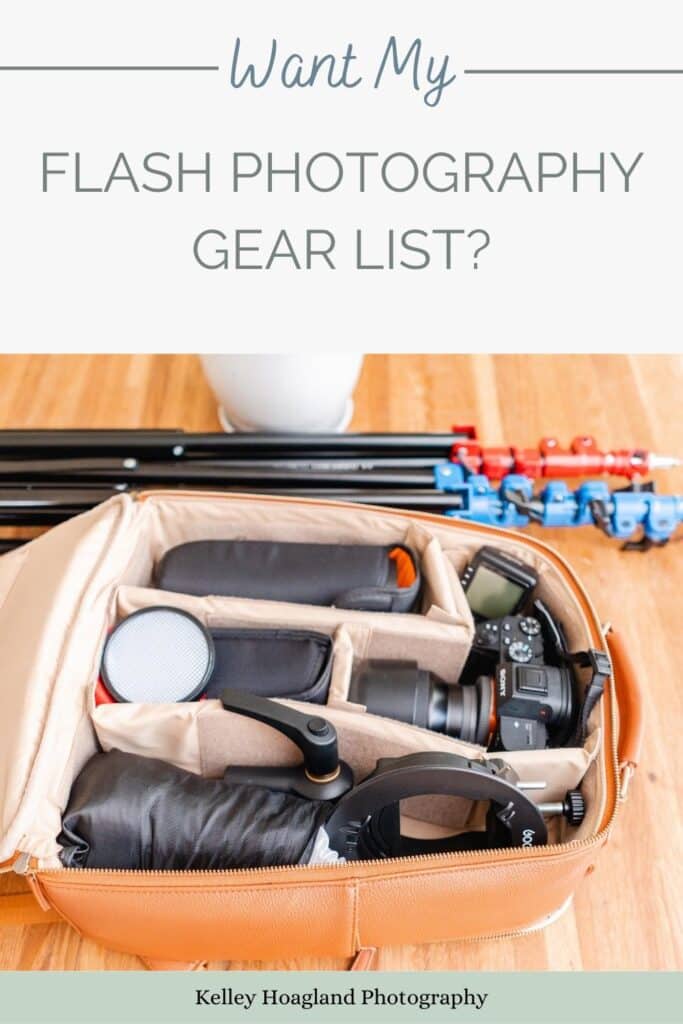
I own and use two different light stand adapters. I first purchased the Godox S2 Speedlight Bracket. Adjusting the position of your light is a very smooth, fluid action with this adapter. My only complaint has been that it takes up a lot of room in my camera bag, which is already full of speed-lights, lenses, and my camera. If you’re wanting to pack into as small a bag as possible, this adapter may not be the best fit for you.
More recently I’ve been taking the Wellmaking U Shape Flash 180 Swivel Mount Bracket along to sessions. It’s less flexible in terms of positioning my modifier, but it does get the job done while taking up much less room in my camera bag.
My Light Meter
Confession: I don’t actually use a traditional light meter most of the time. I have a Sekonic L-358 incident light meter that I use with my film camera. Instead, when metering light and setting white balance for my digital flash photography session, I use the Expodisc. Specifically, I like the larger 82mm version.
I first fell in love how the Expodisc contributed to my outdoor, natural light sessions looking more consistent. It only made sense to me to use it when photographing sessions inside as well.
I share my full approach to choosing camera flash settings, metering with the Expodisc and setting white balance in my full indoor flash photography course. Get it now on sale for $49!

So there you have my flash photography gear list! As you will note, I did put a considerable investment into my two main speed-lights (and I do prefer the results I get when using them). However, the supporting gear of light stand, adapters, and modifiers do not have to break the bank to be effective when using flash for a camera.
Want more flash photographer education, check out my full flash course, or the free intro course linked below.
Get the Full In-Home Flash Photography Course ! It will teach you the very basics of how your flash works.
Learn More From Kelley:
Still learning how to use your camera? Check out Kelley’s Beginner Course
Read How To Troubleshoot if your Godox V1 isn’t firing.